


Volkswagen may cut 100,000 jobs in brutal reset
Volkswagen may cut 100,000 jobs in brutal reset

Tobi Opeyemi AmureSun, June 28, 2026 at 12:07 AM UTC
0
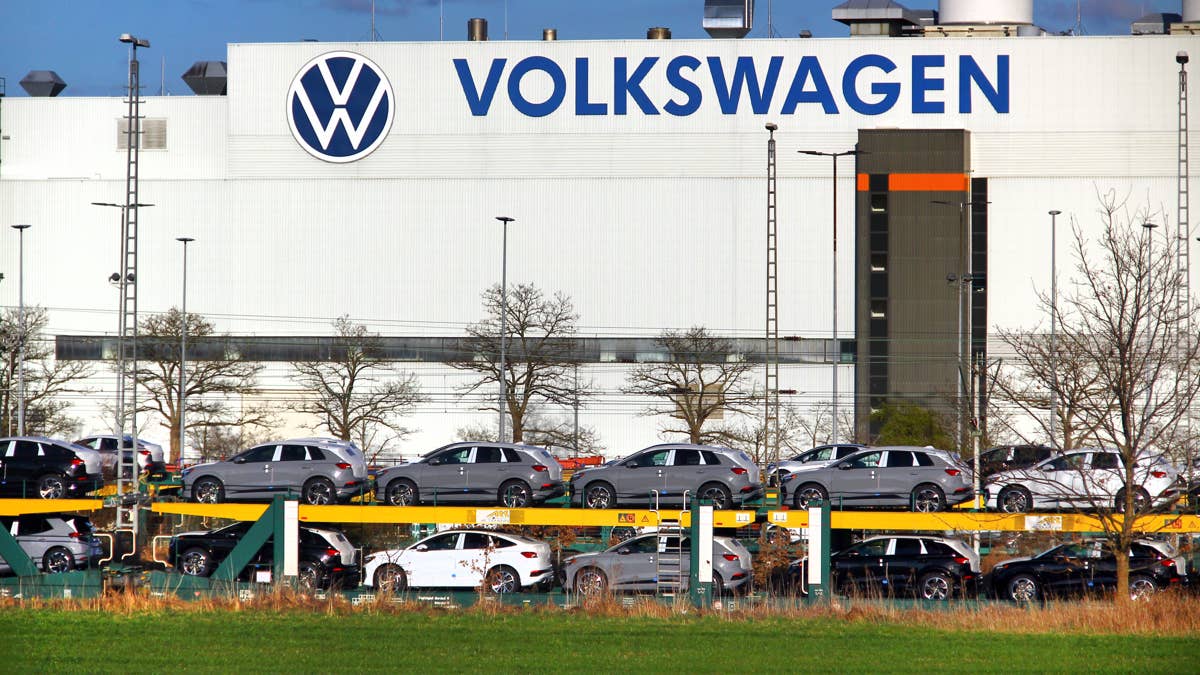
Volkswagen CEO aims to cut up to 100,000 jobs and stop production at four German plants.Turker Minaz &sol Getty Images
There is a particular kind of fear that settles over a factory town when the numbers stop adding up.
It does not arrive with a single layoff notice. It builds quietly, in shift cuts, hiring freezes, and the slow realization that the company everyone's parents worked for is no longer what it was.
For most of the past century, a job at Europe's largest carmaker carried something close to a lifetime guarantee. The factories were not just employers. They were the backbone of entire towns, the reason mortgages got approved and pensions got funded.
That backbone is now under more strain than at any point in living memory.
Cheap, fast-moving Chinese electric vehicles have flooded the market. The expensive bet on going fully electric has not paid off the way executives promised. The company has been quietly trimming for two years already, but none of it has been enough to stop the bleeding.
Now Volkswagen (VLKAF) is preparing something far bigger. CEO Oliver Blume aims to cut up to 100,000 jobs and end production at four German plants, according to a report from German business magazine Manager Magazin, as detailed by CNBC.
The plan would roughly double an existing program to cut 50,000 jobs, and it would break a 2024 deal with unions that ruled out German plant closures until the end of 2030, according to CNBC.
If it goes through, it would be the most radical overhaul in the company's 89-year history, according to Reuters.
Volkswagen faces Chinese rivals and a costly transition
The pressure on Blume is not abstract. He runs the world's number-two carmaker at a moment when tariffs, Chinese competition, and the costly shift to electric vehicles (EVs) have all landed on earnings at once, according to Reuters.
His answer is to shrink the company back to its core and stop spending as if the old growth story still holds.
More Automotive:
Tesla rival forced to make big changes amid EV shift
Why Jim Cramer says Ford's real story isn't trucks or EVs
Rivian has bad news for hundreds of its workers
Chinese brands have been the sharpest edge of that pressure. They build EVs faster and price them lower, and they have taken share in the exact markets that once made German engineering feel untouchable.
At the same time, buyers in Europe and the United States have cooled on electric cars more than executives planned, leaving expensive factories running below capacity.
When I pulled Volkswagen's own headcount, the math behind the proposal came into sharp focus. The group employed about 657,400 people at the end of the first quarter of 2026, according to figures the company gave to CNBC. Cutting 100,000 of those roles means roughly one in six jobs disappears.
Here is the scale of what Blume is reportedly weighing.
Up to 100,000 jobs are targeted for elimination, representing about 15% of the workforce, CNBC reported.
Four German plants are set to stop production, in Hanover, Zwickau, Emden, and at sister brand Audi's site in Neckarsulm, according to Reuters.
Volkswagen cut its planned investment by about 15%, to just over 130 billion euros ($148 billion) over five years, CNBC noted.
About 657,400 employees are on the books at the end of the first quarter of 2026, according to the company via CNBC.
Shares are down more than 25% so far in 2026, CNBC confirmed.
The company is not denying the move. A Volkswagen spokesperson declined to discuss confidential documents but said the entire group "must undergo profound change," according to CNBC.
The VW plant closures that break a union promise
The closures are the part that will sting longest. Over the medium term, the company plans to wind down its plants in Hanover, Zwickau, and Emden, plus Audi's Neckarsulm site, once the models built there are phased out, according to Reuters.
Advertisement
The same report says Blume and finance chief Arno Antlitz want to carve the core VW brand and the parts business into separate entities, a structural change that goes well beyond ordinary cost-cutting.
That broken promise is what turns a balance-sheet exercise into a political fight. In late 2024, the company agreed with unions to avoid factory closures in Germany this decade, according to CNBC. The new plan tears that agreement up before the ink is dry.
Related: Volkswagen makes harsh decision to end EV production in U.S.
The reaction was immediate. Volkswagen's works council and the powerful IG Metall union said they would resist, vowing in a joint statement to "do everything in our power to prevent them," according to Reuters.
The plan was "presented by the CEO during a management board meeting," Bloomberg reported, which means the board has already seen the full scope of what Blume wants.
Closing a plant in Germany is not like closing one in many other places. Labor sits on the supervisory board, contracts run for years, and entire towns are built around a single gate.
Walking back a signed no-closures deal invites strikes, and strikes at a carmaker this size ripple straight through the economy.
What the Volkswagen cuts mean for investors
My read is that the spin-off, not the headcount number, is the real signal here. Splitting off the core brand is a quiet admission that the sprawling group model, nine brands from Skoda to Porsche under one roof, has grown too heavy to steer.
For anyone holding VWAGY, the stock has been telling that story all year, down more than a quarter in 2026, according to CNBC.
Restructuring stories like this rarely move in a straight line. The near term can bring strikes, restructuring charges, and ugly headlines that push the shares lower long before any of the promised savings show up.
The longer-term wager is a leaner company that finally competes with Chinese rivals on price, rather than legacy and badge. Neither result is locked in, and a drawn-out union fight could stall the entire plan.
For workers, the stakes are heavier than any share price. One in six jobs at a single employer is the kind of number that reshapes whole regions, hollowing out the towns that grew up around the assembly lines.
None of this is final yet. A Volkswagen spokesperson stressed that the decisions still have to be discussed and approved by the company's governing bodies, according to CNBC.
The supervisory board, where labor holds half the seats, must sign off, and the union has promised a fight.
Blume has now laid out the most aggressive plan of his tenure. Whether he can push it past the people whose jobs are on the line is the question that will define Volkswagen's future, and possibly his own.
Related: Volkswagen Gets a Big Boost in Its Fight Against Tesla
This story was originally published by TheStreet on Jun 28, 2026, where it first appeared in the Automotive section. Add TheStreet as a Preferred Source by clicking here.
Source: “AOL Money”
